
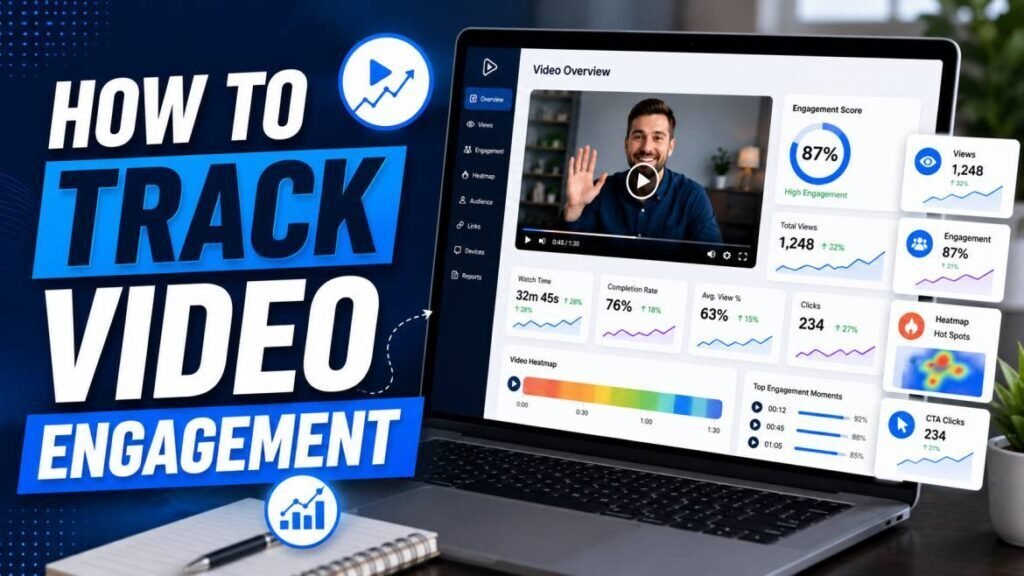
The biggest advantage of sending video with Dubb over a plain email is that you can see what happens next. You know who watched, how far they got, and whether they came back, which turns follow-up from guesswork into a targeted, timely action. This guide explains what engagement data Dubb gives you and, more importantly, how to use it to close more deals.
Quick answer: Dubb shows you who watched your video, how much of it they viewed, and whether they clicked your call to action. Use these signals to prioritize follow-up: reach out fast to people who watched fully or returned, and rethink your message for those who did not click to play. Engagement data can also sync to your CRM on higher plans; verify current availability on dubb.com.
Key Takeaways
- Dubb tracks who watched, how far they got, and whether they clicked your CTA.
- Watch data is diagnostic; it tells you which step of your outreach needs work.
- Engagement ranks your prospects by interest, so you know who to call first.
- Fast follow-up on a strong watch signal converts far better than a delayed one.
- CRM syncing keeps engagement next to the deal on higher plans; verify on dubb.com.
Why Engagement Tracking Changes Your Follow-Up
Most outreach is a black box. You send a message and hear nothing, unsure whether it was read, ignored, or missed. Video with Dubb removes that blindfold. Because the video lives on a hosted page, Dubb can measure how each recipient interacts with it. That data does two valuable things: it shows you what to improve, and it tells you exactly where to spend your time. Both make you more effective. For the wider framework of reading video metrics, see our video sales metrics guide.
What You Can Track in Dubb
Dubb surfaces the engagement signals that matter for sales. Exact features vary by plan and evolve over time, so verify the current specifics in your account, but the core signals include the following.
| Signal | What it tells you |
|---|---|
| Views | Whether the recipient opened and played the video |
| Watch amount | How far through the video they got |
| Repeat views | Whether they came back for another look |
| CTA clicks | Whether they took your next step |
| Notifications | Real-time alerts when someone watches |
How to Read the Signals
Each signal points to a different action or fix. Read them together to build a picture of each prospect.
They watched the whole video, maybe twice
This is your strongest buying signal. The prospect is interested. Follow up quickly and directly, ideally while the video is fresh in their mind. Speed matters, because interest fades.
They watched part of it
There is some interest, but your hook or length may have lost them. A short, value-adding follow-up can re-engage them, and you might tighten the video for next time.
They opened but did not play
Your thumbnail or opening line did not earn the click. Try a different, more personal thumbnail or subject line rather than assuming they are not interested.
They clicked your CTA
The clearest signal of all. They took the next step, so respond immediately and make it easy to keep moving forward.
Turn Engagement Into a Follow-Up Routine
The point of tracking is action. Build a simple routine around your engagement data. Each day, check who watched your recent videos. Prioritize the strongest signals first: full watches, repeat views, and CTA clicks. Reach out to those prospects promptly with a relevant, personal message. For partial watches, send a lighter touch that adds value. This routine ensures your limited time goes to the prospects most likely to convert, instead of being spread evenly across everyone.
The videos themselves are easy to send at volume, as our personalized video at scale playbook explains. Engagement data is what keeps that volume smart, focusing your human effort where interest is real.
Connect Engagement to Your CRM
Engagement data is even more powerful when it lives next to the deal. On higher plans, Dubb can sync engagement to your CRM, so a rep opening an opportunity sees that the buyer watched the proposal walkthrough twice yesterday. That context turns a cold check-in into a timely, relevant follow-up, and it lets leaders see how video engagement relates to pipeline and closed revenue. Verify the current CRM integrations and the plans they require on dubb.com, since Salesforce and HubSpot integrations are typically part of the Enterprise offering.
Use Engagement to Improve Your Videos
Beyond follow-up, engagement data helps you get better. If many viewers drop off in the first few seconds, your hook needs work. If they open but rarely play, your thumbnail or subject line is the problem. If they watch fully but rarely click the CTA, your ask needs to be clearer or better placed. Read the data as a set of clues about which part of your outreach to fix, then change one thing at a time and measure the effect.
Common Mistakes to Avoid
- Ignoring the data. The whole advantage of video tracking is acting on it.
- Following up too slowly. A strong watch signal is perishable. Move fast.
- Treating all viewers the same. Prioritize by engagement, not by list order.
- Only counting views. Watch depth and CTA clicks matter far more than a raw view number.
- Not learning from drop-off. Where people stop tells you what to improve.
A Weekly Engagement Review
Engagement data only helps if you look at it regularly, so build a short weekly habit around it. Set aside a few minutes to review the week’s videos and answer a few simple questions.
- Who engaged most? Identify the prospects who watched fully or returned, and make sure each has a timely, personal follow-up planned.
- Which video performed best? Find the one that drove the most watches and replies, and consider why. That structure may be worth reusing.
- Where did people drop off? If several viewers stopped at the same point, that part of your message needs work.
- What is your reply rate trend? Compare against recent weeks so you know whether your outreach is improving.
This small ritual turns raw data into decisions, and the improvements compound over a quarter into a meaningfully higher reply rate.
Use Engagement to Coach a Team
For sales managers, Dubb’s engagement data is a coaching tool as much as a selling one, because the work becomes visible. Instead of guessing why a rep struggles, you can look at their actual videos and the numbers behind them. A rep with high click-to-play but low watch rate probably has a weak hook. A rep with high watch rate but low replies probably has an unclear ask or a weak call to action. That specificity makes coaching concrete and fast. It also lets your top performers share exactly what works, so the whole team learns from real, proven examples rather than generic advice.
Set Your Own Benchmarks
It is tempting to chase industry benchmark numbers, but they often mislead, because engagement varies enormously by industry, audience, and how warm your contacts are. A watch rate that is excellent for cold outreach to executives would be poor for a warm nurture list. Rather than compare yourself to a generic figure, compare against your own baseline. Record where your numbers stand today, change one thing, and measure whether it moved. Your own trend line, tracked consistently, is the only benchmark that truly matters.
From Signal to Booked Meeting
Here is how engagement data turns into revenue in practice. You send a personalized video to a prospect on Monday. Dubb notifies you that they watched it twice on Tuesday evening and clicked your booking link but did not complete the booking. That is a strong signal. Instead of waiting, you send a short, warm follow-up on Wednesday morning referencing that they seemed interested and offering two specific times. Because you acted on the signal quickly and personally, the meeting gets booked. Without the engagement data, you would never have known to reach out at exactly the right moment. That is the difference tracking makes, multiplied across every video you send.
Frequently Asked Questions
Can I see exactly who watched my video?
Yes. When you send a video to a known contact, Dubb shows you who watched and how far they got, and it can notify you in real time. Verify the current notification and analytics details in your account.
Does Dubb show how much of the video was watched?
Yes. Watch depth is a core signal, and it is often more useful than a simple view count because it shows genuine interest rather than an accidental open.
Can engagement data go into my CRM?
On higher plans, yes. Dubb can sync engagement to CRMs such as Salesforce and HubSpot so the data lives next to the deal. Verify the current integrations and required plans on dubb.com.
What is the most useful engagement signal?
A full or repeat watch, and a CTA click. These indicate real interest and are your cue to follow up quickly and directly.
Use Tracking Respectfully
Engagement tracking is a powerful tool, and like any tool it should be used thoughtfully. The goal is to be more relevant and timely, not to make prospects feel watched. In practice, that means using the data to help rather than to pressure. If a prospect watched your proposal walkthrough twice, a helpful follow-up offering to answer questions is welcome. A message that says “I saw you watched my video three times” can feel intrusive and works against you. Let the data guide your timing and your relevance quietly, in the background, without announcing it. Used this way, tracking makes your outreach feel more considerate, because you reach out at the moments when help is genuinely useful.
Make Engagement Part of Your Process
Engagement data delivers the most value when it is built into how you work, not checked occasionally. Start each day by reviewing who watched your recent videos, and let that list shape your priorities for the day. Add a note to your CRM or task list for the strongest signals so no hot prospect slips through. Over time, this habit changes how you sell. Instead of working through a static list in order, you focus your energy on the people actively showing interest, which is a far more efficient use of your time.
For teams, making engagement part of the process also means sharing what works. When a manager and reps review engagement data together, they spot which messages and videos drive the most watches and replies, and they turn those into repeatable playbooks. The data stops being a set of individual numbers and becomes a shared source of learning that lifts the whole team’s results. That is when video tracking moves from a nice feature to a genuine competitive advantage.
Conclusion
Tracking engagement is what makes video selling smart rather than a numbers game. Dubb shows you who watched, how far they got, and whether they clicked, and your job is to act on those signals: follow up fast with the most engaged, re-engage the partial watchers, and fix the step the data shows is weak. Build a daily habit around your engagement data, and connect it to your CRM if your plan allows. Check who watched your recent videos today and reach out to your top signal within the hour. That single habit, acting quickly on real interest, is what separates reps who send video from reps who close with it. Over time, it becomes the most reliable way to know where to spend your selling energy. Let the data point you to the warm prospects, keep your follow-up fast and personal, and watch your conversion rate climb as a result. It is one of the few changes in selling that costs almost nothing and pays off almost immediately once you build the habit.
Want built-in tracking that tells you exactly who to follow up with? Start free with Dubb and see how prospects engage with every video you send.